Crossing the Atlantic

2: Brugge, Rotterdam
c: Brugge
Brugge (Bruges in French, and Brügge in German) is the capital and largest city in the Flemish region of Belgium. I prefer to call it Brugge, because this is how the locals call their city, which is located in the northwest of the country. The main attraction for the tourist is the historic city center, which is oval in shape and which is also a prominent World Heritage Site of UNESCO. Some 18 % of the city’s population actually live in this area, living from the unending stream of visitors to this area.
Brugge is also one of the few canal-based northern cities, which would include Amsterdam and St. Petersburg. It is as such also referred to as the Venice of the North. Brugge has a significant economic importance, thanks to its port, and was once one of the world's chief commercial cities. Bruges is well known as the seat of the prestigious university institute for European studies.
Our ship berthed in Zeebrugge, (which translates to Brugge At The Sea) from where we can catch a shuttle to Brugge, specifically the historic center. We had booked and purchased r/t tickets from Viator online for €20/pp. And then we found out we could have bought these tickets in the cruise terminal. The problem is that everybody who wants to go and visit Brugge tries to catch the shuttle in the morning. So if you get there between 8 and 10, you can count on a long wait, because these shuttles run every x minutes and do not take into account that there are more passenger in the morning going from Zeebrugge to Brugge, and vv in the afternoon. The wait was over an hour, before we could get the last 2 spaces in the shuttle bus. Viator was not very helpful.
The next time it is probably worth it to take a taxi and share the fare with other passenger. I believe they have 9-passenger taxis available.
The shuttle dropped us off in a large parking area, which was still about 1.5 mile away from the city center, the Grand Place. There are just a few taxis around, but one can also do the trip in style in a more readily available horse-drawn carriage.
.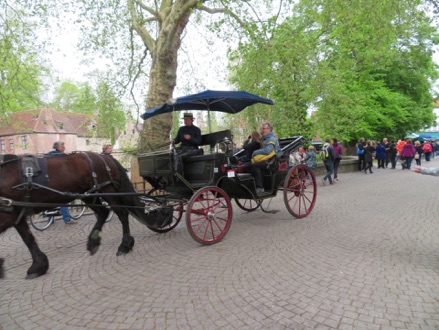
right: To stay in compliance with the medieval feel there are these horse-drawn carriages for hire.
Old Brugge is a cute, old city, which has been transformed into a tourist Mecca town. Almost every single building is there to extract money from the hordes of tourists descending into this kettle of brew. The parking lots, including those for the shuttle, we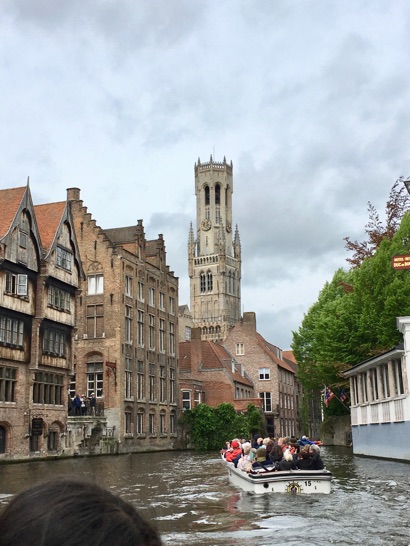 re still 1.5 miles away from the center of town.
left: One of the many tourist sightseeing boats plying their trade.
Tourist sightseeing boats are everywhere in the canals of this old city. The standard 35 minute tour was €10/per person, but we had discount tickets for €7 from an outfit named Couwenijs.
Nothing is free in this world and they have these discount tickets because they are the furthest away and hard to find. And the other outfits are of course not helpful in telling where they are.
The tourist boats can handle, I believe 30 passengers per trip. If you get to sit in the middle, there will be not much space to move around and it will be also difficult to make pictures without the coifs of some of the passengers getting into your way. Which makes the trip not much fun. But the tour boat driver makes sure that at the end of the tour he is there in the front of the boat to help the passengers disembark and to receive a gratuity for his efforts. They have developed the extraction of money from the tourists into a highly developed science.
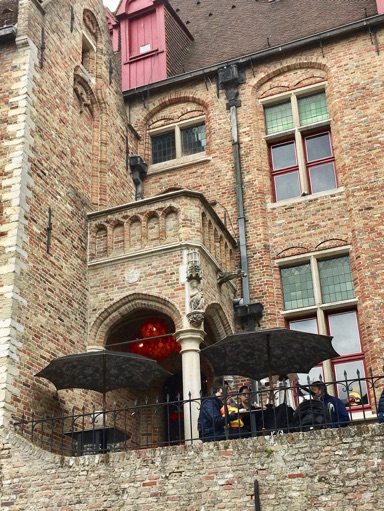
Of the many residences and churches we passed on tour, we also see a lot of places where you can sit down for food or just a drink to watch the tourist boats go by.
right: The red door on the top left is the entrance to haul the furniture in.
Because the streets are narrow, a lot of stuff is hauled by boats to their destinations in town. There is a pulley and rope mounted on the top of the red door. This is a safer way to haul heavy stuff instead of going through a window.
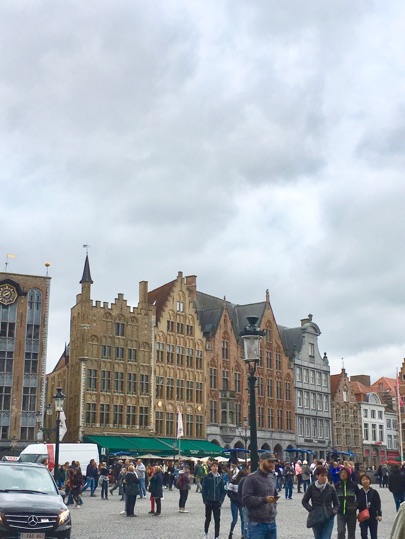
left: A section of the Grand Place.
We finally made it to the Grand Place, the center of town. It is huge and you will need a wide-angle lens for your camera, which I didn’t have.
On the left, out of sight, is the large Town Hall building.
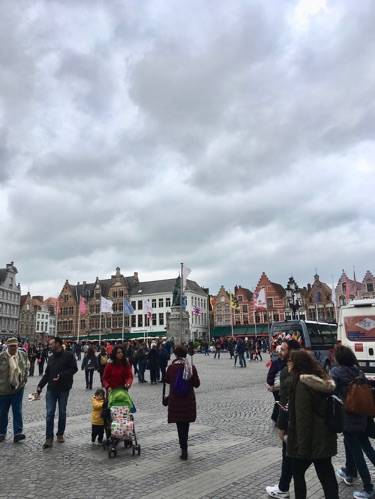
right: Another view of the Grand Place.
On the return journey we also had to wait for about an hour before the bus coming had space for us. Well, there was only one seat left, but a kind person stood up and offered his seat. He then walked down to the exit area in the middle of the bus, where he ducked to remain invisible to the driver. There are great guys around in this world. I wish there are more of them.
Or, I think we just look old. In more recent times there are more people offering us their seats in trams and buses, etc.
b: Rotterdam
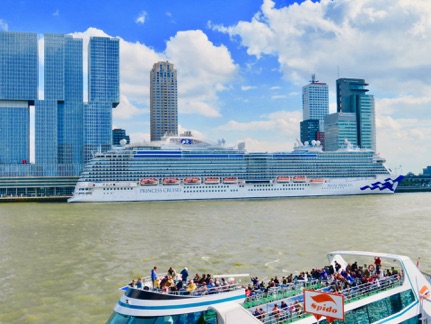
left: The “Regal Princess” in the Port of Rotterdam.
The Regal Princess dropped anchor in the port of Rotterdam in the morning and was scheduled to leave again at 5:30 p.m. for Aarhus.
Rotterdam is a very modern city with unusual skyscrapers and architecturally interesting buildings. The city was severely damaged in WW II. On May 14, 1940, the German Luftwaffe bombed and destroyed most of the city. And out of the ruins modern skyscrapers and livable buildings emerged.
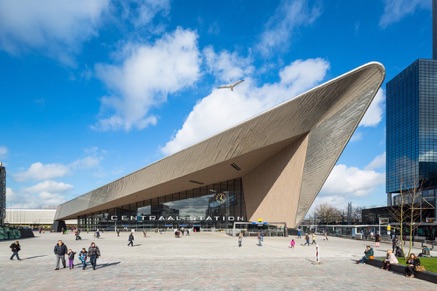
right: Rotterdam Central Station, courtesy Jannes Linders.
This is the main railway station in Rotterdam handling around 110,000 passengers daily. It was officially opened in 2014
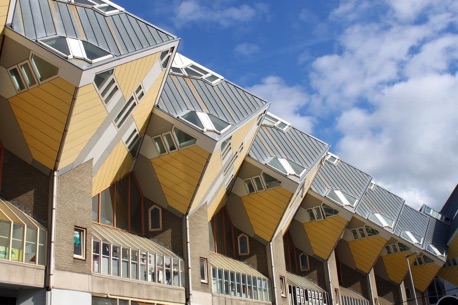
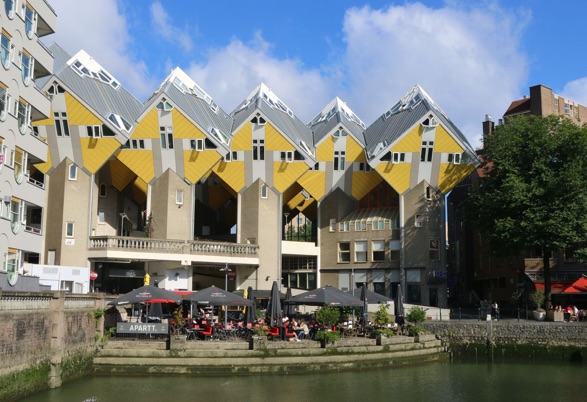
left: modern apartments. You may have to get used to the unusual interiors, if you don’t want to stumble in the dark.
Keukenhof.
We had purchased a combo ticket from Viator for a tour of Keukenhof, a boat tour in the harbor, and a visit to the Rotterdam Tower. But the guide for Keukenhof, our first destination, said it was impossible to do all of this in the 6.5 hours available, because traffic is heavy. When we were back home, we notified Viator of the problem and asked for a partial refund. They conveniently ignored us.
As a matter fact, traffic was so heavy, just going to Keukenhof and back gave us only a window of 2 hrs 15 minutes to spend in park. Our bus returned to the harbor parking lot at 4:05, and there was still about one mile to walk/run to be in the ship in time.
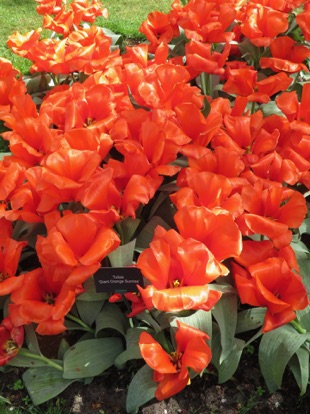
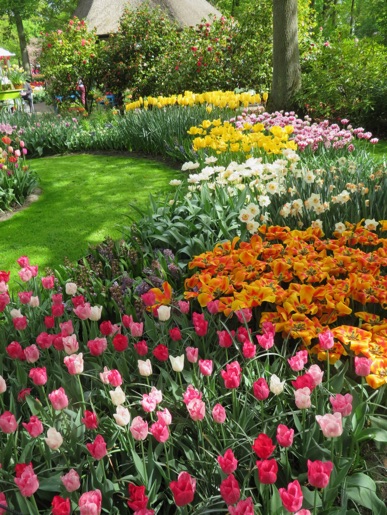
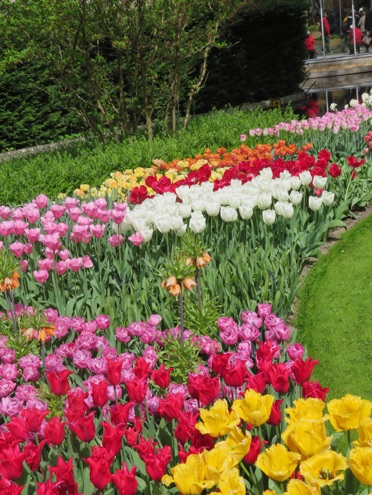
Keukenhof is always amazing., as usual; we have visited this attraction many times over the years, but it is still an enchanting experience. Food service on the premisses remains to be mediocre; there is only little to eat if you are gluten-intolerant.
It was now already late in the season and many flowers have wilted. The complex was scheduled to close in two-three weeks.
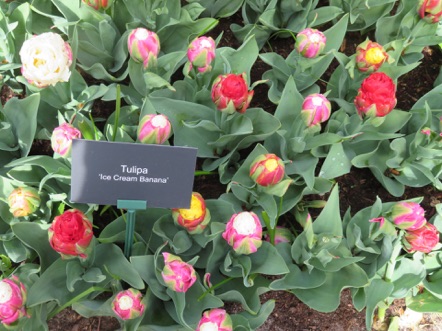
right: Ice Cream Bananas Tulips
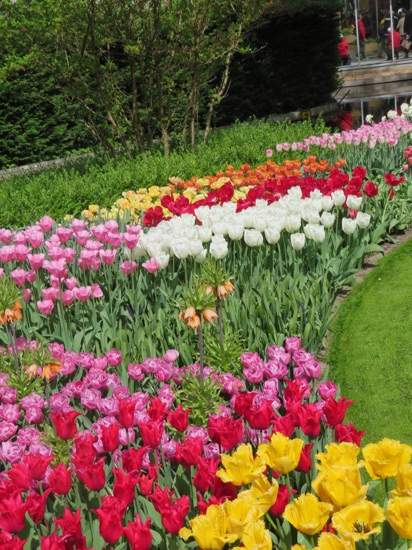
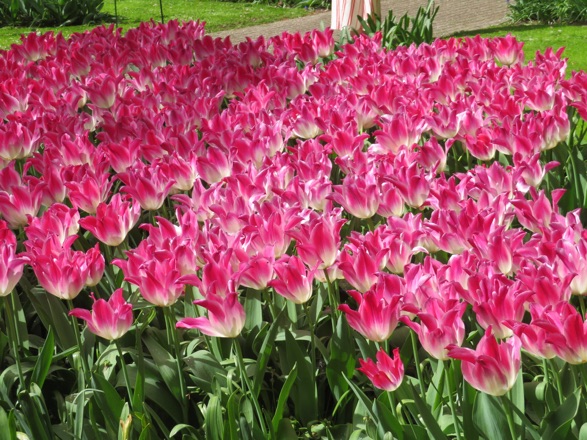
There is a strong emphasis on displaying new varieties of tulips in these shows. And sometimes the variations introduced are such it is difficult to see they are still tulips. Look closely at some of the pictures below. Many of the flowers are completely different than how we imagine tulips should look like.